





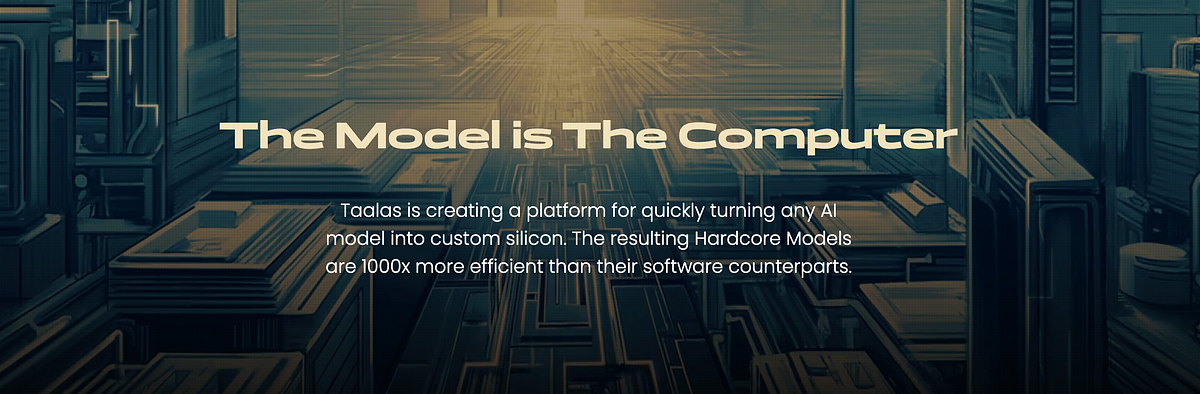
The name Taalas is gaining attention online. Many people see this term during searches but may not understand what it represents. This can make the topic confusing, especially when different websites provide different explanations. A useful guide should make the subject simple instead of adding more confusion.
This article explores Taalas in clear and easy language. We will discuss its general identity, purpose, possible applications, important features, and growing online interest. We will also explain what readers should check before trusting information connected with the name. The goal is not to make unsupported claims. Instead, this guide gives you a practical way to understand the topic and research it safely. Since names and online projects can change over time, readers should always verify important details through reliable and current sources.
Taalas Quick Information Table
| Detail | Information |
| Name | Taalas |
| Topic Type | Technology and online search topic |
| Main Interest | Technology, computing, and digital innovation |
| Common Audience | Technology readers, researchers, developers, and curious users |
| Information Type | Company, technology, products, and related developments |
| Main Value | Exploring new approaches to computing and technology |
| Research Advice | Check current and primary sources |
| Suitable For | Readers seeking a simple introduction |
| Information Changes | Possible as technology develops |
| Verification | Recommended for technical or business claims |
Unlike a person’s biography, a topic like Taalas is better explained through a profile table. It gives readers useful details without inventing personal information such as age, family, or birthplace. This approach also improves trust because every field relates directly to the subject.
What Is Taalas?
Taalas is a name associated with the modern technology space. People searching for it may be trying to learn about its technology, company background, products, or new developments. The subject can become technical quickly. However, beginners do not need advanced knowledge to understand the basic idea.
The easiest approach is to think about the wider computing industry. Modern technology companies try to make computing faster, more efficient, or better suited to particular tasks. Some businesses focus on software. Others develop hardware, chips, or systems designed for specific workloads. These areas are especially important as artificial intelligence grows. They can affect speed, power use, cost, and performance. Readers researching this name should therefore consider both the company and the technology connected with it.
Why Is Taalas Getting Attention?
Interest in Taalas can be linked to the rapid growth of artificial intelligence and specialized computing. AI systems often need large amounts of processing power. Running these systems can also require expensive hardware and significant energy. This has created demand for different computing approaches.
Technology companies are trying to solve these problems in many ways. Some improve traditional processors. Others create specialized hardware for particular AI models or workloads. This makes emerging computing companies interesting to developers, investors, researchers, and technology enthusiasts.
However, attention does not automatically prove that every new technology will become successful. New hardware must usually demonstrate reliability, useful performance, reasonable costs, and practical applications. Readers should separate technical evidence from marketing language when studying emerging technology.
Understanding the Technology Behind Taalas
Understanding Taalas becomes easier when you first understand specialized computing. A normal computer processor is designed to perform many different jobs. Specialized hardware takes another approach. It can be designed around a narrower group of tasks.
This approach may improve efficiency when the target workload is well understood. Artificial intelligence is one area where specialized processors have attracted major interest. AI models perform huge numbers of mathematical operations. Hardware designed around these operations may reduce unnecessary work.
There are also trade-offs. Specialized systems may offer less flexibility than general-purpose processors. Their value depends on the software, workload, manufacturing process, and real-world deployment. This is why technical claims should be compared using consistent tests rather than simple headline numbers.
How Taalas Fits Into AI Computing
One reason people research Taalas is the growing demand for AI infrastructure. Artificial intelligence is no longer limited to research laboratories. Businesses now use AI for writing tools, image systems, customer support, data analysis, programming, and many other tasks.
All these applications need computing resources. Large AI models can be costly to operate because they process enormous amounts of data. Faster and more efficient hardware could help reduce some of these demands.
Specialized AI hardware attempts to match computing resources more closely with specific models or tasks. This differs from relying entirely on flexible hardware that must support many workloads. The practical result depends on the system. Readers should look for measured performance, energy use, deployment details, and supported AI models before drawing conclusions.
Main Features Worth Understanding
When researching Taalas, it helps to focus on meaningful technical features instead of promotional terms. Performance is one important factor. A computing system must process its intended workload at a useful speed. Efficiency matters too because high power use can increase operating costs.
Another important feature is specialization. Hardware designed for particular workloads can sometimes remove functions that are not needed for those tasks. This may create efficiency benefits. Yet specialization can also limit how easily the hardware handles changing requirements.
Scalability is equally important. A useful system must work beyond a small demonstration. Businesses may need thousands or millions of tasks processed reliably. Manufacturing, software support, deployment, and maintenance therefore matter alongside raw chip performance. These factors provide a more complete picture of any emerging computing platform.
Potential Benefits of Specialized AI Hardware
The ideas associated with Taalas highlight several possible advantages of specialized AI computing. One benefit is speed. Hardware built around a particular workload may perform that job more directly. Another possible benefit is lower energy use for the same amount of useful computation.
Cost is also important. AI services can become expensive when millions of users send requests every day. Improving hardware efficiency may lower infrastructure costs. Lower costs can make advanced AI tools available to more organizations.
There can also be simpler system designs when hardware and workloads are closely matched. Still, these benefits are not guaranteed. Results depend on the model, hardware design, manufacturing technology, software, and deployment conditions. Independent testing provides a stronger basis for comparison than theoretical performance alone.
Taalas and the Changing Semiconductor Industry
The semiconductor industry is changing quickly, and Taalas sits within a broader conversation about specialized chips. For decades, general-purpose processors handled most computing jobs. Graphics processors later became important because they could perform many calculations at once.
Artificial intelligence created another major shift. AI workloads require huge amounts of mathematical processing. This encouraged companies to build accelerators and other specialized processors. Today, developers can choose between CPUs, GPUs, custom accelerators, and application-specific hardware.
Each option has strengths and weaknesses. Flexible processors can support many applications. Highly specialized chips may provide greater efficiency for narrow workloads. The best choice depends on what an organization needs to run. This competition is encouraging new ideas across the semiconductor and AI infrastructure markets.
Why Energy Efficiency Matters
Energy efficiency is an important part of the Taalas discussion because modern AI can consume substantial computing resources. Large data centers contain thousands of processors. These systems need electricity for computation, networking, storage, and cooling.
Reducing the amount of energy needed for each AI task could therefore provide several advantages. Companies could lower operating expenses. Data centers could support more workloads using available electrical capacity. Efficient hardware may also reduce some environmental pressures associated with computing growth.
However, energy claims need context. A chip can look efficient under one test and perform differently under another. Useful comparisons should consider the same AI model, workload, precision, system configuration, and measurement method. Clear testing conditions help readers understand whether an efficiency claim applies to real applications.
Performance Versus Flexibility
A central question around Taalas and specialized hardware is whether greater efficiency is worth reduced flexibility. General-purpose processors are popular because developers can use them for many jobs. Software can change without requiring completely new hardware.
Specialized computing works differently. A system designed around a narrow workload can remove unnecessary operations. This can potentially improve speed and efficiency. However, artificial intelligence changes rapidly. New models, architectures, and techniques appear often.
Hardware must therefore remain useful long enough to justify its design and manufacturing costs. This creates an interesting balance. More specialization can bring efficiency, while greater flexibility can help hardware adapt to future changes. Understanding this trade-off is essential when comparing new AI computing technologies.
Who May Be Interested in Taalas?
Different groups may follow Taalas for different reasons. AI developers may want faster ways to run machine-learning models. Data-center operators may care about power consumption and infrastructure costs. Semiconductor engineers may be interested in new approaches to chip design.
Technology researchers can study how specialized computing changes AI deployment. Businesses may also follow the topic because computing costs can affect the price of AI services. Investors may examine the company and its market opportunities, although financial decisions require much deeper research than a general technology article can provide.
Students can benefit from the topic as well. It provides a useful example of how software and hardware influence each other. Learning about specialized processors can help beginners understand why AI performance depends on much more than the model itself.
Challenges Taalas and Similar Technologies Can Face
Every new computing approach faces challenges. Taalas and other specialized technology companies must operate in a highly competitive industry. Designing advanced chips can require large amounts of money, skilled engineers, manufacturing partners, testing, and software development.
Competition is another challenge. Established semiconductor businesses already have large customer networks and mature software ecosystems. A new system must offer meaningful benefits to encourage organizations to change their existing infrastructure.
AI itself changes quickly. Hardware designed around today’s popular models must remain useful as software develops. Manufacturing capacity can create additional limits because advanced semiconductor production is complex. These challenges do not mean a technology cannot succeed. They simply show why readers should consider the complete business and technical picture.
How to Research Taalas Safely
Anyone researching Taalas should begin with primary information where possible. Look for official technical explanations, product documentation, engineering presentations, and clearly described demonstrations. These sources can explain what the technology is designed to achieve.
Next, compare those statements with independent reporting and technical analysis. Pay close attention to dates because technology information becomes outdated quickly. A claim made during an early prototype stage may not describe a later commercial product.
Readers should also watch for vague benchmark comparisons. Ask what model was tested, which competing hardware was used, and how power consumption was measured. These simple questions can reveal whether a comparison is meaningful. Avoid treating social media posts or repeated claims as proof without checking their original source.
Future Possibilities for Taalas
The future of Taalas will depend on how its technology performs outside controlled demonstrations. The AI industry needs faster computing, but speed is only one requirement. Cost, reliability, manufacturing capacity, software support, and energy use are also important.
Specialized AI chips could become more common as companies look for alternatives to expensive general-purpose infrastructure. Some organizations may use different processors for different AI models. Others may prefer flexible systems that can support rapidly changing software.
This creates room for several computing approaches rather than one universal solution. Future progress should be judged using real products and measurable results. Readers interested in this subject should follow technical releases and independent tests instead of relying only on predictions.
Why Taalas Matters to the Wider Technology Market
Taalas represents a broader idea that is becoming important in computing: hardware does not always need to serve every possible task. Sometimes, designing technology for a specific workload can create meaningful advantages.
This idea has existed for years, but artificial intelligence has made it more important. AI companies need huge amounts of processing power. Even a small improvement in efficiency can become significant when repeated across millions of operations.
Competition also encourages innovation. When more companies explore different processor designs, the industry gains new ideas about performance, memory, energy, and manufacturing. Some ideas will become widely used, while others may remain limited. Either way, these experiments can influence future computer systems and how AI applications are built.
Conclusion
Taalas is an interesting topic for anyone following artificial intelligence, semiconductor design, and specialized computing. Its wider significance comes from an important challenge facing the technology industry: running increasingly powerful AI systems without allowing computing costs and energy demands to grow endlessly.
The best way to understand this subject is to focus on evidence. Look at real hardware, measured performance, power requirements, software support, and practical deployments. Avoid assuming that a promising idea automatically guarantees commercial success.
Technology changes quickly, so information should also be checked regularly. As more technical details, products, benchmarks, and real-world results become available, readers can develop a clearer understanding of where this technology fits within the growing AI hardware market.
Frequently Asked Questions
1. What is Taalas?
Taalas is associated with technology and specialized computing, particularly discussions around artificial intelligence hardware. Readers may encounter the name while researching AI processors, semiconductor technology, or alternative computing designs. Because emerging technology can develop quickly, exact technical and business details should be checked against current primary sources. This helps prevent older information from being mistaken for present-day facts.
2. Why is Taalas connected with artificial intelligence?
The connection comes from interest in specialized computing for AI workloads. Modern artificial intelligence requires many mathematical calculations. Specialized hardware can be designed to perform particular calculations efficiently. This may provide advantages in speed, power use, or cost. Actual benefits depend on the workload and hardware, so benchmark conditions and real deployment results remain important.
3. What is specialized AI hardware?
Specialized AI hardware is computing equipment designed mainly for artificial intelligence workloads. Unlike a general processor, it may focus on operations frequently used by AI models. This can improve efficiency for selected tasks. However, specialized hardware can sometimes provide less flexibility. Developers must balance performance, compatibility, cost, energy consumption, and future software changes when choosing hardware.
4. Can specialized chips reduce AI costs?
They potentially can. A processor that performs an AI workload using less energy or fewer resources may reduce operating costs. The size of the saving depends on many factors. These include hardware price, electricity use, software support, workload size, and data-center infrastructure. Real-world testing is therefore more useful than looking at one performance number.
5. Is new AI hardware always better than GPUs?
No. GPUs remain useful because they are powerful and flexible. They also have mature software ecosystems. Specialized AI hardware may perform certain workloads more efficiently, but results vary between systems and models. A fair comparison should use similar workloads, settings, and measurement methods. The right processor depends on what a developer or organization needs.
6. Where can I learn more about Taalas?
Start with current primary technical materials and company information. Then compare those details with reputable technology reporting and independent engineering analysis. Look for clear benchmark methods rather than impressive numbers without context. Checking publication dates is also important. AI hardware develops rapidly, so older descriptions may no longer reflect the newest technology, products, or capabilities.