





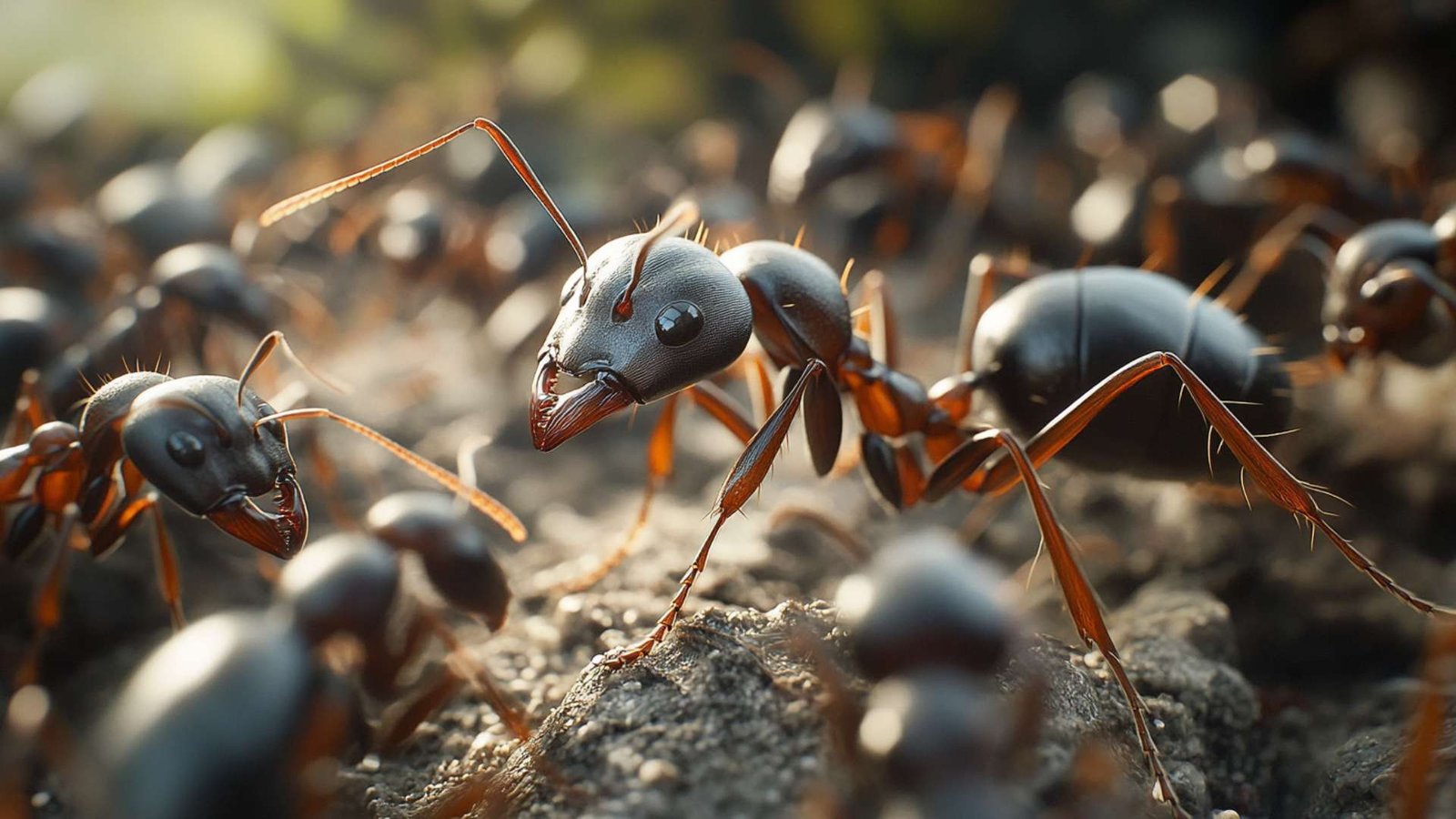
Ants are tiny insects, but they play a huge role in nature. You may see them walking across your kitchen, garden, or sidewalk. Some live quietly outdoors, while others enter homes looking for food and water. Their teamwork makes them one of the most successful insect groups on Earth. They can carry objects much heavier than their own bodies. They also build complex nests and communicate with one another. Learning about ants helps us understand why they appear and how they behave. It also makes household pest problems easier to manage. In this guide, we will explore their body, diet, colonies, life cycle, and habits. We will also cover common species and practical prevention tips. The goal is simple: give you useful information without confusing scientific terms. Whether you love insects or have an unwanted colony nearby, this guide can help.
What Are Ants?
Ants are social insects that belong to the family Formicidae. They are related to bees and wasps. Most species have six legs, two antennae, and a narrow waist. Their bodies usually have three main sections. These are the head, thorax, and abdomen. Ants live in organized groups called colonies. A colony can contain workers, males, and one or more queens. Each member has a specific role. Workers search for food, protect the nest, and care for young ants. Queens mainly produce eggs. Males have a short reproductive role. Different species can look very different. Some are black, while others are brown, red, or yellow. Their size also varies greatly. This social structure helps colonies survive changing conditions. It also explains why removing a few visible insects may not solve an infestation.
Where Do Ants Live?
Ants can live in many different environments around the world. They commonly build nests in soil, wood, rocks, and plants. Some species create underground tunnels with many connected chambers. Others live inside damaged wood or wall spaces. You may also find nests beneath paving stones and garden objects. Warm and damp areas can attract many species. Food availability is another major factor. A property with easy access to crumbs may become attractive to workers. Outdoor colonies can sometimes establish themselves near doors and windows. Once workers discover food indoors, they may create regular trails. These trails help other colony members find the same source. Ants are highly adaptable insects. This allows them to survive in forests, grasslands, deserts, cities, and homes. Their nesting choice often depends on species, weather, food, and shelter.
Ants and Their Amazing Social Structure
A colony works almost like a small community. Every ant has a task that supports the group. Worker ants perform most daily activities. They collect food and feed developing young. They also clean and defend the nest. Queens have a different purpose. Their main job is producing new members for the colony. Some colonies have one queen, while others have several. Male ants usually appear during reproductive periods. They mate with queens and then die soon afterward. Communication is also important. Ants use chemical signals called pheromones to share information. A worker finding food can leave a scent trail behind. Other workers can follow that trail toward the food. This system allows many insects to work together without speaking. It is one reason an ant colony can respond quickly to new food sources.
What Do Ants Eat?
Most ants are opportunistic feeders. Their diet depends on the species and available food. Many species eat sweet substances, such as fruit juices and plant nectar. Others prefer insects, seeds, fungi, or animal remains. Some household species are attracted to sugary foods. Greasy foods can also attract certain types. Workers often carry food back to the nest. There, it can be shared with other colony members. Ants may also farm certain insects for sugary secretions. This behavior shows how complex their feeding habits can be. In a home, uncovered food can become a strong attraction. Even tiny crumbs may provide enough food for small workers. Keeping food sealed can reduce this attraction. Regular cleaning also removes many food sources. Understanding their diet is useful when trying to prevent unwanted visitors.
How Do Ants Communicate?
Ants have several ways to communicate with each other. Chemical signals are one of their most important tools. Workers release pheromones that carry different messages. One trail can point toward food. Another signal can warn about danger. Ants also use touch and body movements. Their antennae help them sense chemicals and physical contact. When a worker finds a useful food source, it may return along a trail. Other workers can then follow the scent. The trail can become stronger as more insects use it. This explains why you may suddenly notice many ants in one area. The insects are often following information left by earlier workers. Their communication system is simple but highly effective. It helps colonies coordinate work without a central leader. This remarkable teamwork is a key part of their survival.
The Life Cycle of Ants
Ants develop through four main stages. These stages are egg, larva, pupa, and adult. The queen lays eggs inside the colony. Tiny larvae hatch from those eggs. Larvae cannot care for themselves. Worker ants provide food and keep them safe. The larvae then develop into pupae. During this stage, major body changes take place. Finally, adult ants emerge. Their roles depend on colony needs and species. Some become workers, while others become reproductive adults. Temperature, food, and colony conditions can affect development. A healthy colony may produce many new workers when resources are plentiful. This helps the group expand and explore new areas. The life cycle explains why an ant problem can continue. Visible workers may represent only a small part of the colony. The nest can contain eggs, larvae, pupae, and reproductive ants.
Different Types of Ants
There are thousands of known ant species, and each has unique traits. Carpenter ants are known for nesting in wood. They do not eat wood like termites. Instead, they remove it while creating nesting areas. Fire ants are known for their painful stings and defensive behavior. Pavement ants commonly nest near buildings and paved surfaces. Odorous house ants can release a noticeable smell when crushed. Sugar ants is a common name used for several small, sweet-loving species. Argentine ants can form large networks in suitable environments. Species identification can be difficult because many ants look similar. Size, color, nesting location, and behavior can provide useful clues. Correct identification matters when dealing with a serious infestation. Different species may need different control methods. Avoid assuming that every small black insect is the same species.
Why Do Ants Enter Homes?
Ants usually enter buildings for simple reasons. Food, water, warmth, and shelter are common attractions. Kitchens can provide many easy food sources. Small spills and crumbs may be enough to attract workers. Pet food can also become an attraction if left uncovered. Leaking pipes may provide needed moisture. Cracks around doors and windows can provide easy entry points. Weather can also influence their movement. Heavy rain may disturb outdoor nests and push workers toward sheltered areas. During dry periods, some species may search indoors for water. Once workers discover a reliable food source, they may return repeatedly. This can create visible trails along walls and floors. Finding the reason for their activity is important. Removing the attraction can make prevention much easier.
Are Ants Helpful to the Environment?
Although many people see ants as pests, they provide important ecological benefits. They help move soil and create small underground spaces. These activities can improve soil structure and water movement. Some species spread seeds as they collect food. Ants also help break down dead plants and animals. This returns nutrients to the surrounding environment. Many ants are predators of other small insects. They can therefore influence insect populations in their habitats. Their nests also provide shelter for certain tiny organisms. Ants are part of many food webs. Birds, reptiles, amphibians, and other animals may eat them. Their environmental role shows why they should not always be viewed negatively. Problems usually happen when colonies move into unwanted areas. Outside the home, they can be a normal and useful part of the ecosystem.
How Strong Are Ants?
Ants are famous for their strength relative to body size. A worker can carry objects that seem huge compared with its body. Their strength comes from their small size and body structure. Smaller animals can produce impressive force compared with their weight. Ants also work together when moving larger objects. Several workers may pull or carry food toward the nest. Their teamwork makes the colony even more effective. However, strength differs among species. Body size and muscle structure both matter. An ant carrying a crumb is not simply using one powerful muscle. Its entire body helps control the load. Their ability to cooperate makes them especially impressive. Watching a group move food can reveal how organized their behavior really is.
How to Prevent Ant Problems
Prevention starts by making your home less attractive. Keep food in sealed containers whenever possible. Clean crumbs and spills soon after they happen. Empty indoor trash regularly. Check areas where water may collect or leak. Repair gaps around doors, windows, and utility openings. Outdoor plants should also be checked for pest activity. Tree branches touching buildings can sometimes provide routes into upper areas. Keep firewood and similar materials away from exterior walls. If you notice an ant trail, follow it carefully. The trail may lead toward an entry point or food source. Removing the source can reduce activity. Persistent problems may require professional pest identification. Avoid using random chemicals without reading their labels. Safe handling is always more important than quick results.
How to Remove Ant Trails
Ant trails can be frustrating, especially when they appear repeatedly. Start by cleaning the surface where the insects travel. A mild household cleaner can help remove food residue and scent trails. Next, look for the entry point. Check gaps near doors, windows, pipes, and walls. Seal suitable small openings when possible. Store food securely and clean nearby surfaces. Outdoor nests should also be considered if activity continues. Simply killing visible workers may not address the colony. The nest may continue sending more workers toward the same food source. If the problem is large or persistent, consider getting professional help. Identification should come before choosing a treatment. This is especially important when stinging species or wood-nesting species are involved. A careful approach can reduce repeated activity and limit unnecessary pesticide use.
Ants vs. Termites: What Is the Difference?
Ants and termites can sometimes be confused. Both may appear around wood or buildings. However, they are very different insects. Ants have a narrow waist between their body sections. Termites generally have a broader, straighter body shape. Ant antennae are usually bent or elbowed. Termite antennae are more straight and bead-like. Their wings can also provide clues. In winged forms, ant front wings are usually longer than the rear pair. Termite wings tend to be similar in length. Carpenter ants may damage wood while creating nests. Termites actually consume cellulose-based material. If you find winged insects near damaged wood, careful identification is important. A pest professional can help determine what species you have. Correct identification can prevent wasted time and unsuitable treatments.
Interesting Facts About Ants
Ants have many surprising abilities that make them fascinating. Some species can survive difficult environmental conditions. Others create huge underground networks with many chambers. Certain ants cooperate with plants or other insects. Some species protect insects that provide them with food. Army ants can move through large areas while searching for prey. Leafcutter ants collect pieces of leaves for their underground fungal gardens. They do not simply eat the leaves they carry. Instead, the leaves help support fungi that the colony uses as food. Ant colonies can also change their behavior when conditions change. Workers may switch tasks based on the colony’s needs. These behaviors show that ants are more complex than they first appear. Their small size hides an impressive world of teamwork and adaptation.
When Should You Call a Pest Professional?
A few outdoor ants are usually not a serious concern. The situation changes when activity becomes constant or widespread. Large indoor trails may indicate a nearby colony. Repeated activity can also suggest an easy entry route. Wood-nesting species deserve special attention around buildings. Stinging species can create safety concerns for people and pets. Professional help may also be useful when home prevention fails. An experienced technician can identify the species and locate nesting areas. They can then recommend suitable treatment options. This approach is often better than trying several products without knowing the cause. Always ask about safe application methods and follow product instructions. Children and pets should be protected from treatment areas. Good pest control focuses on solving the source rather than only removing visible insects.
Conclusion
Ants are small creatures with complex lives and impressive social systems. They communicate through chemical signals and work together as a colony. They can also benefit soil, plants, and natural ecosystems. However, indoor colonies can become frustrating when they find food or water. The best solution starts with understanding why they appeared. Clean food spills, seal entry points, and remove easy water sources. Watch trails carefully and look for possible nesting areas. If activity continues, proper species identification can make control easier. Remember that not every outdoor colony needs removal. Ants are valuable parts of nature. The key is learning when they are helpful and when they become a household problem. With the right knowledge, you can handle ant activity more calmly and effectively.
FAQs About Ants
1. What attracts ants to a house?
Food, water, warmth, and shelter can attract ants indoors. Crumbs, sugary spills, pet food, and leaks can be especially attractive. Small openings around windows and doors can also provide easy access. Cleaning surfaces and storing food properly can reduce these attractions.
2. How many ants live in a colony?
Colony size varies greatly by species. Some colonies contain only a small number of workers. Others can contain thousands or even much larger populations. The number depends on species, food availability, nesting conditions, and colony age.
3. Can ants damage a house?
Some ants can cause property problems. Carpenter ants may create nesting galleries inside damp or damaged wood. They do not eat wood like termites. Finding repeated activity around wooden structures deserves careful attention.
4. How can I stop ants from entering my kitchen?
Keep food sealed and clean crumbs quickly. Wipe sugary or greasy spills as soon as possible. Empty trash regularly and check for leaks. Also inspect doors, windows, pipes, and wall gaps for possible entry points.
5. Are ants dangerous to people?
Most common household ants are not dangerous. Some species can bite or sting when threatened. Fire ants are a well-known example. If you find aggressive or stinging ants, avoid disturbing their nest and consider professional identification.
6. Why do ants follow the same path?
Workers often leave chemical pheromone trails. Other colony members can follow these trails toward food or useful locations. More workers may strengthen the trail through repeated use. Cleaning the surface can help remove food residue and scent signals.